The era of the autonomous hotel: how AI agents and intelligent systems are transforming the industry.
The hospitality industry has changed radically in recent years. Linear algorithms are giving way to artificial intelligence, which by 2026 will sit at the core of hotel operations.
Unlike ordinary generative AI, which only produces text, agentic AI is capable of reasoning and making autonomous decisions based on real corporate data.
From answering questions to autonomous action
The key difference with today's AI agents is their ability to act independently to reach a given goal. Where an ordinary chatbot simply tells a guest the check-in time, agentic AI coordinates requests on its own, adjusts room availability and manages pricing through deep integration with the hotel's internal systems.The key technological shifts include:
- ■ Agent-to-agent (A2A) communication: AI agents talk directly to external systems, responding to market demand instantly.
- ■ Seamless APIs: a modular architecture lets AI run workflows efficiently without human involvement.
- ■ Deep personalisation (P-RLHF): a guest's unique preferences are accounted for at the level of neural connections, anticipating requests before they are even voiced.
The direct interaction protocol: how it works, using Checkin as an example
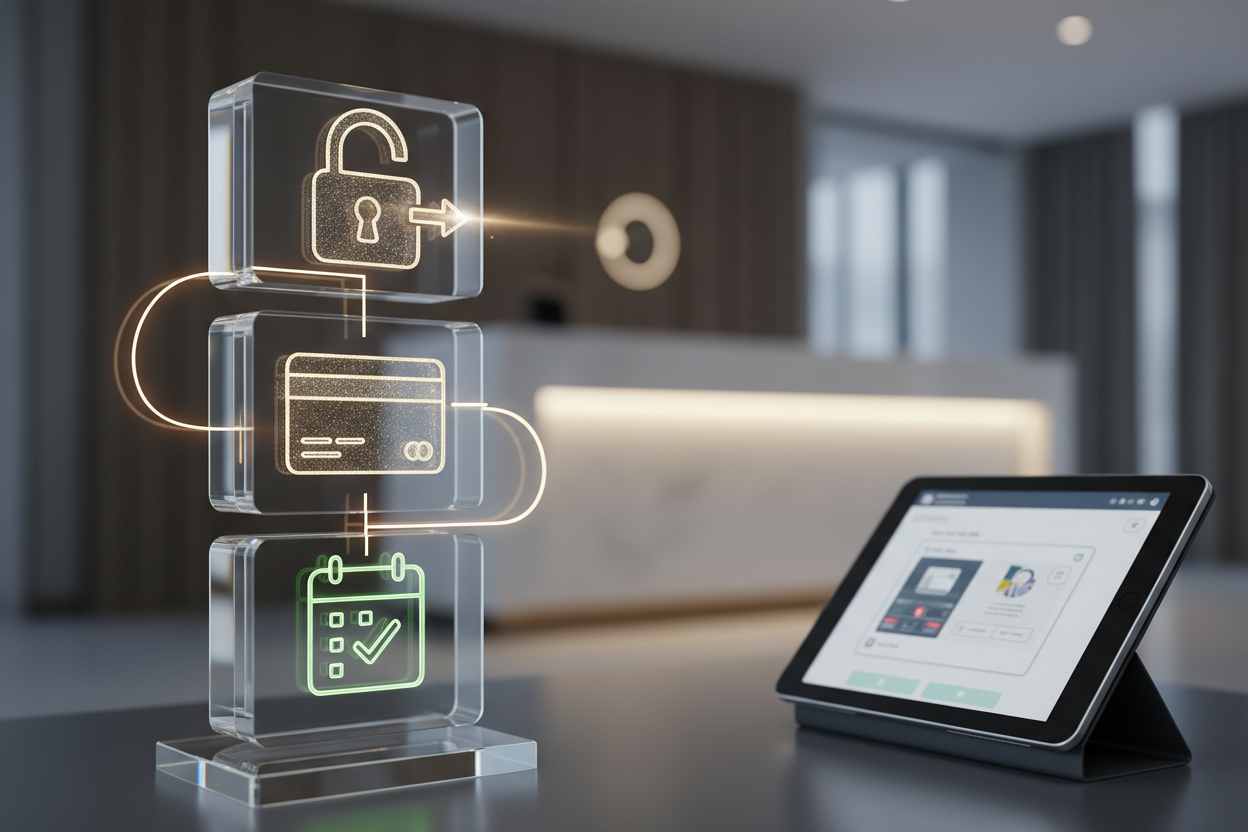
To understand how theory turns into revenue, it is worth looking at how modern booking systems such as Checkin operate. Here, communication and sales become a finely tuned digital pipeline in which data is passed on without distortion or delay.The mechanics of the process look like this:
- ■ Property sync: through the Checkin system, the hotel (the property) passes on a complete set of data about itself — current room inventory, detailed service descriptions, rate specifics and cancellation rules.
- ■ Multilingual by default: the system currently works in three languages, which removes barriers in international booking. Information adapts to the user automatically while keeping terminology precise.
- ■ How the agent works: the agent (a reservations specialist or partner) sees a live grid of available rooms in real time. Thanks to the direct connection, the risk of overbooking is eliminated: the data in the system is identical to the data in the hotel's booking grid.
- ■ Instant booking transfer: the moment the agent presses "book", the information flies straight into the hotel's system.
Speed as the decisive sales factor
More than 75% of guests today prefer messengers to calls or email. Waiting longer than 5–10 minutes for a reply sharply reduces the chance of conversion: the guest simply moves on to a competitor. Around 80% of all enquiries concern standard questions, which AI agents handle instantly. The results of implementing specialised solutions are striking:- ➢ The share of lost enquiries in high season dropped from 26% to 0.7%.
- ➢ Direct bookings grew by 18% thanks to instant rate matching.
- ➢ Multilingual support (20+ languages): AI makes it possible to hold a conversation with an international guest in their native language, preserving cultural context and the nuances of hospitality.