How a booking grid brings overbooking down to zero
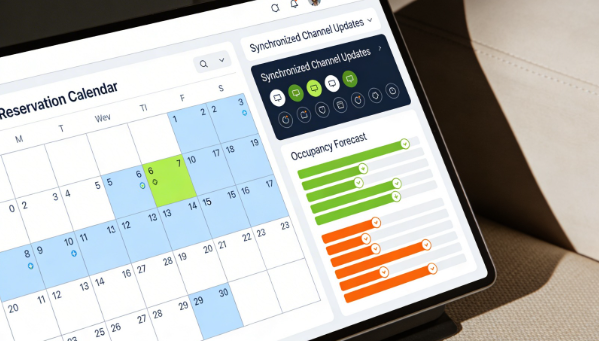
Overbooking is one of the worst scenarios a hotel can face. Two guests for one room, a confrontation at the front desk, a frantic search for alternative accommodation and damage to your reputation. In an era of online sales and multiple channels, the risk of double bookings multiplies.
And yet bringing it down to zero is entirely realistic. One of the key tools for that is the booking grid. Let's look at how it works and why building steady sales without it is difficult today.
In this article:
- What a booking grid is.
- Where overbooking comes from.
- How visual control reduces errors.
- Which features matter for full protection against overlaps.
- How this affects revenue and how manageable the business is.
What a booking grid is
A booking grid is a visual representation of every reservation in table form: rooms or categories run vertically, dates horizontally. Each booking occupies the cells covering the guest's stay.In a single window, the front-desk manager sees:
- occupied and available rooms;
- arrivals and departures;
- extended stays;
- overlapping dates.
Why overbooking happens
The causes of double bookings are most often technical or organisational:
- sales run through the website, OTAs and by phone without syncing;
- data is transferred manually;
- several employees work in parallel without a single system;
- late departures or date changes are not accounted for;
- outdated spreadsheets and notebooks are still in use.
How the booking grid reduces the risk to zero
1. Full occupancy transparency
The whole picture of your room inventory is right in front of you. The system will not let you create a booking with overlapping dates for the same room.2. Syncing with sales channels
If the grid is integrated with a channel manager and the booking module on your website, availability updates automatically. A room that has been sold becomes unavailable across every marketplace instantly.3. Control over stay statuses
Arrival, stay, departure, cancellation, no-show — each status is displayed separately. That rules out forgotten bookings and incorrect date changes.4. Category management
You can allocate guests flexibly within a category with no risk of overlaps. This matters especially when working with groups and during peak periods.Which features are essential
For the tool to genuinely protect you from overbooking, it needs to be part of a full PMS and support:- automatic syncing with OTAs;
- a change log by employee;
- occupancy analytics.
How this affects revenue
Minimising overbooking feeds directly into financial performance:
- no compensation payouts to guests and no penalties for staff;
- you don't lose repeat guests;
- trust in the brand grows;
- the operational load on staff falls;
- rates and revenue become easier to manage.
The bottom line
A booking grid is a tool for systematic control. It brings sales, check-ins and room inventory management together in one space. Set up correctly, it reduces the risk of overbooking to zero, and the hotel gets what matters most — predictable processes, a calm team and steady revenue.CheckInn.kz — a digital platform for automating hotels, hostels, sanatoriums and apartments
Contact: +7 776 154 9232